













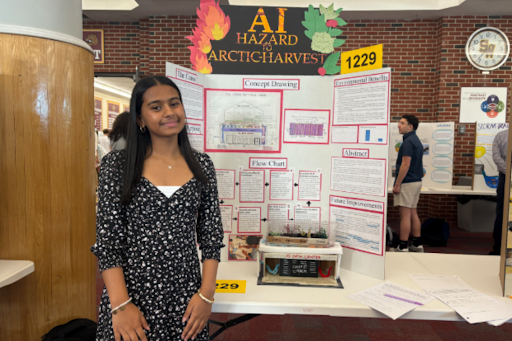
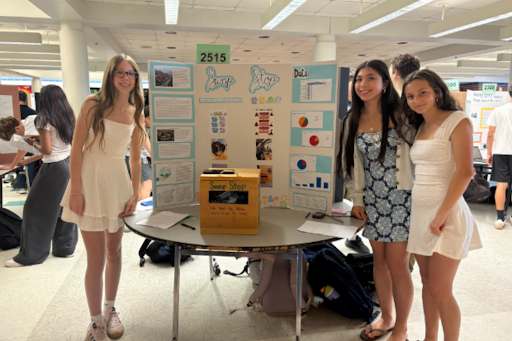
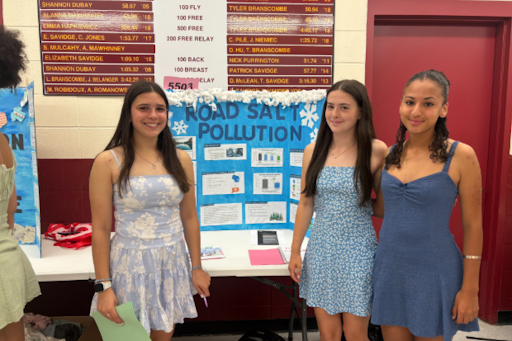
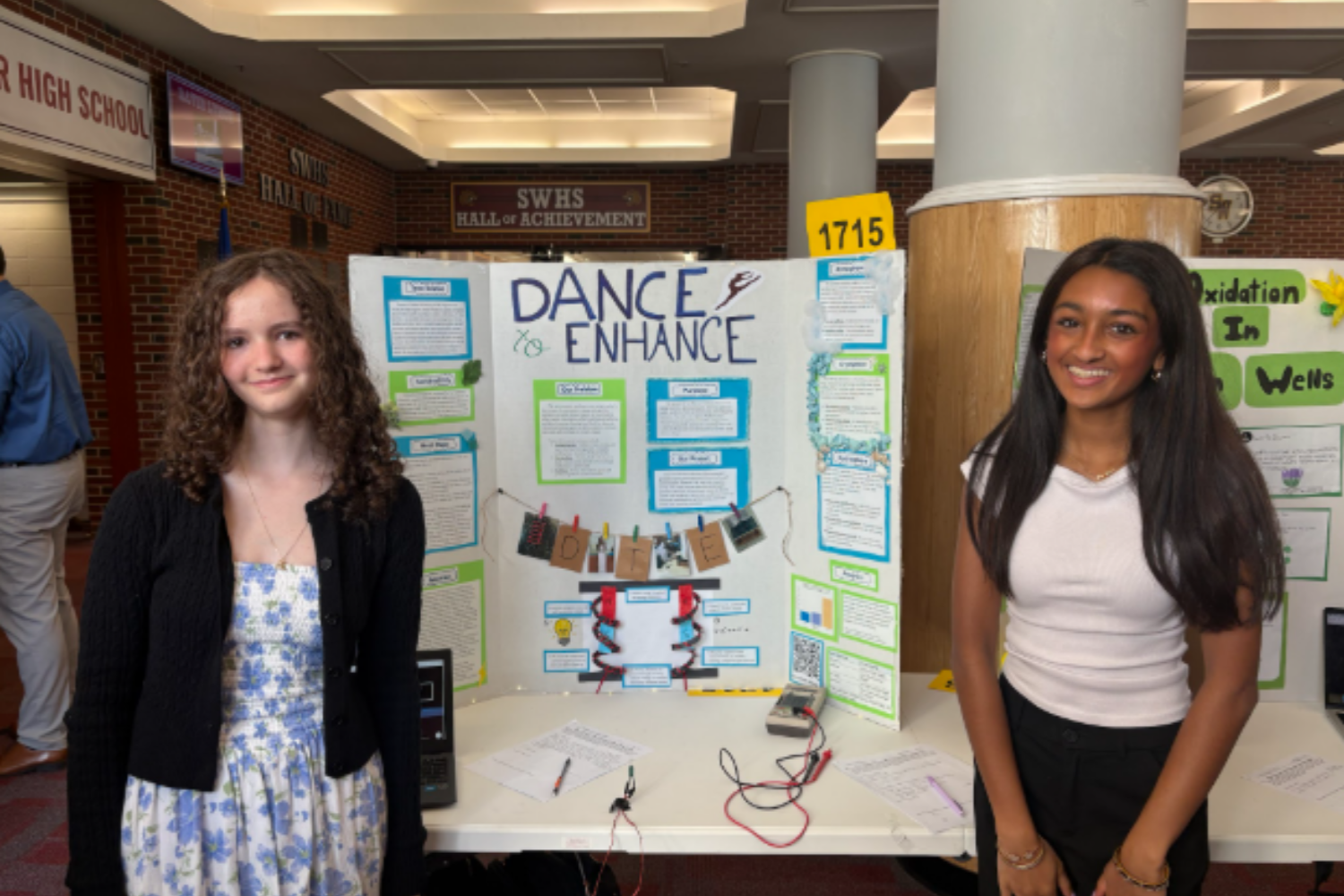

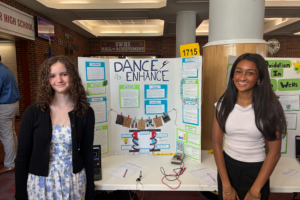
On Friday, May 29th, the Class of 2029 participated in the Annual Freshman Science Fair. All 9th grade students completed a project as part of their curriculum in Physical Science, which was displayed through the form of posters and artifacts to be judged by a panel.
Students worked in pairs, trios, or individually to curate their final products. This project was introduced shortly after April break, and 9th grade science classes researched and completed these projects until the day of the fair. Students were tasked with tackling an environmental problem, and proposing a tangible solution.
“This event allows students to develop a sense of advocacy within their community at a young age, which will in turn make them more confident advocating for their beliefs later on in life. Additionally, these projects give community members a chance to learn from fresh minds, integrating new information and perspectives into South Windsor,” science fair judge and SWHS senior Eliza Blanchfield told The Prowl.
This event has become a staple in the 9th grade experience, after a brief hiatus during the COVID-19 pandemic, this is the 15th year this event has run.
Honors students had to complete an additional paper detailing their project and research process, alongside their physical poster, both of which counted as assessment grades.
“It is very dramatic, you can really tell in the products being produced how much effort is being put in. Some students start right after April break and some start two days before the fair,” Physical Science teacher Mrs. Eitel told The Prowl.
The purpose of this event is to allow students to independently research topics of personal interest and apply their critical thinking skills to enhance their projects.
“It keeps students engaged so close to the end of the year. Students truly find a novel approach to find solutions to environmental problems,” Eitel said.
While the science fair has had a historically large impact on the student body, community members are also impacted by this event.
This year, science fair judges included a mix of student volunteers, teachers, community members, and even Connecticut State Representative, Tom Delnicki.
Projects this year included topics ranging from Artificial Intelligence, to invasive plants and insects, to eutrophication. The top ten projects will be announced by the science teachers this week, with the ranking determined by the judges scores.
“Projects were scored on a scale of 0-5, judging the criteria students were required to meet, specifically, whether or not students were able to identify a clear problem and solution, and how their solution was tested/implemented,” Blanchfield commented.
9th grade science teachers can also give out bids to projects they feel would perform well at the state science fair. The Connecticut State Science Fair (CSEF), will be held next spring at Quinnipiac University.