



































After several tiring hours toiling away in 8th grade math and science, you are finally given a reprieve as gym class starts. Finally, the teachers have decided to let you outside after an eternity of playing “French Western Pacific Toe Tag” nuk’em or any other of those games which are clearly made up by gym teachers and not real sports.
As the class heads outside with high hopes, your noses are instantly assaulted by a smell so horrendous you can not pinpoint it; you and your friends can only hypothesize it is that kid who uses three swipes of 72 hour deodorant and then says, “I’m good for 9 days”. For the next month, this smell persists and assaults everyone’s nostrils; it becomes the talk of the class whenever your gym class is forced outside. Little did anyone know though, it wasn’t the 72 hour deodorant kid, but the trees all along.
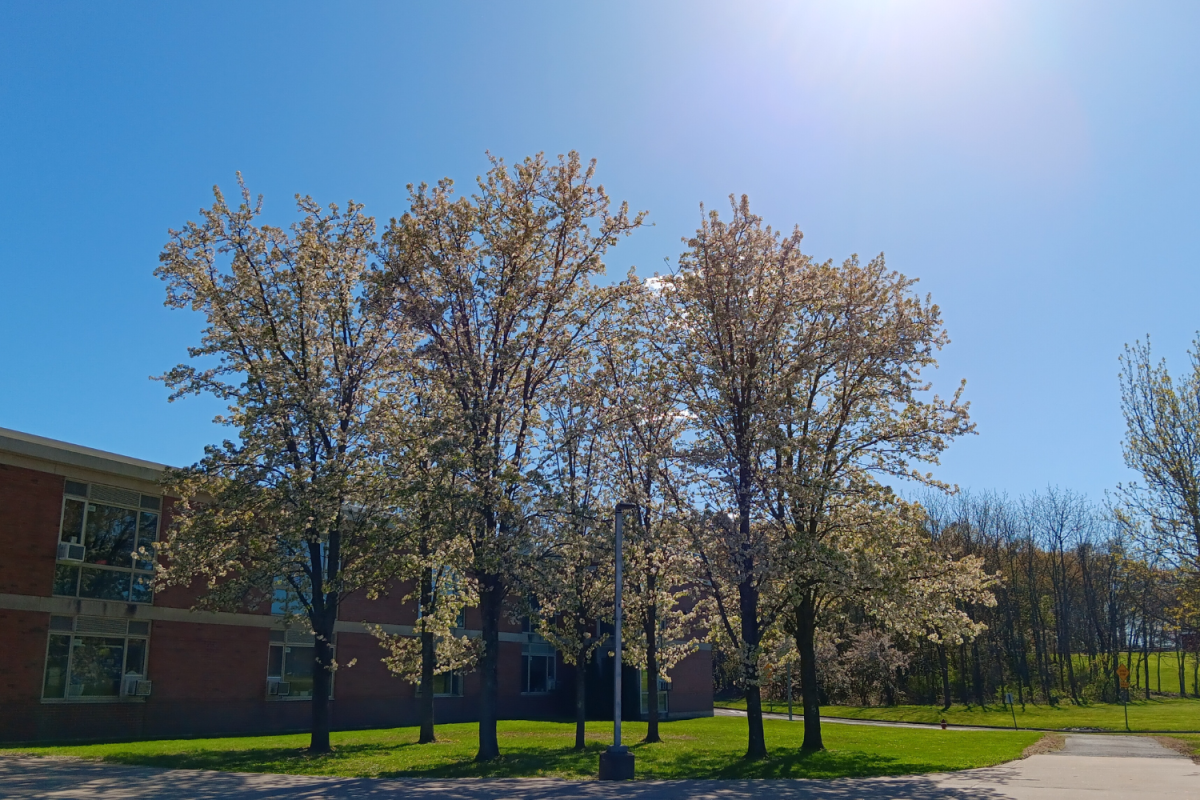
Every single year in South Windsor, at the start of spring, the Bradford Pear tree blooms, but these beautiful blooms hide a nasty secret that can’t be noticed from afar but become apparent at even a brisk walk past. Although these trees stink, what are the deeper and more meaningful reasons behind them being planted across town?
The Bradford Pear stinks, and this is not even debatable. Just a quick Google search of “Trees that Stink” and it instantly shows you multiple websites and social media discussions about just how bad they smell. This great stink is even more noticeable in large public places such as schools, especially at Timothy Edwards Middle School where several are planted prominently in the front of the school.
“It smelled extremely awful,” freshman Killian Drummond described. He elaborated how “it smelled as if a fish market was placed outside the school grounds.”
Drummond’s description for how the trees smelled outside of the middle school was a fairly common consensus from students who have experienced the smell, and is it not really a surprise. Every time a gym class went outside, students got off the bus in the morning and even when the window was opened in the building, the smell of the Bradford Pear persisted. It simply is a fact of life at Timothy Edwards that you will smell dead fish outside in spring. But although it causes a great stink, it isn’t universally hated.
“I really like the appearance of them; they look really pretty and beautiful,” SWHS freshman Meghan Donovan said.
This is one of the most paradoxical sides of the Bradford Pear tree as there are people who actually do love it, and it makes sense because they are beautiful. It is likely one of the reasons why they were planted in the first place, but the Bradford’s upsides don’t end there.
“The logic behind it is probably to attract pollinators, but not like bees, who are attracted to sweeter things, but to attract things like flies who also pollinate,” SWHS Environmental Science teacher Deb Field explained. “When we have trees in front of the school, which drop fruit, and when they rot, attract yellowjackets which are problematic for people”.
This variety serves as an ideal solution to common landscaping challenges. Unlike other species, these trees do not attract nuisance insects, they offer significant aesthetic value with their white flowers and vibrant foliage, and they require minimal maintenance, but not everyone is a fan of these trees because they compete with native species.
“They can crowd out Maple Tree seedlings and Oak Tree seedlings, and those are the trees that we want,” Field would later state, continuing to say “They don’t really produce anything useful, they really just take up space”.
Due to how easily Bradford Pear trees can spread their seeds, they can easily spread into local woods and forests. They are also not native to Connecticut and are an invasive species of tree; they don’t produce fruit and also give little back to the environment. These issues, coupled with their notoriously unpleasant odor, have caused the Bradford Pears to fall out of popularity with many groups as they seek to find a better tree to suit their needs.
Bradford Pear trees today are mostly a remnant of a when they were a new and inexpensive tree that looked visually intriguing. Today, they are more of a local annoyance to middle schoolers outside during gym class.