











Every single year the town of South Windsor collects hundreds of millions of dollars from tax payers to support its infrastructure, services, programs and other essential town services, but few in town know the full extent of where this money goes beyond basics like funding education and roadwork.
In 2026, South Windsor collected $168,541,726. This funding was categorized into three primary groups based on its source: the General Fund, the Recreation Special Revenue Fund, and the Sewer Special Revenue Fund.
Revenue generated from programs such as the Parks and Recreation Department is allocated to the Recreation Special Revenue Fund, while fees collected from sewage and septic services are directed to the Sewer Special Revenue Fund. The money collected from these special revenue funds goes directly back into these programs, making them largely self funded. Money collected for the General Fund provides the town with the flexibility to cover any municipal expenditures.
The General Fund is primarily fueled by property and motor vehicle taxes. These local revenues are supplemented by state educational grants and transfers from other town accounts.
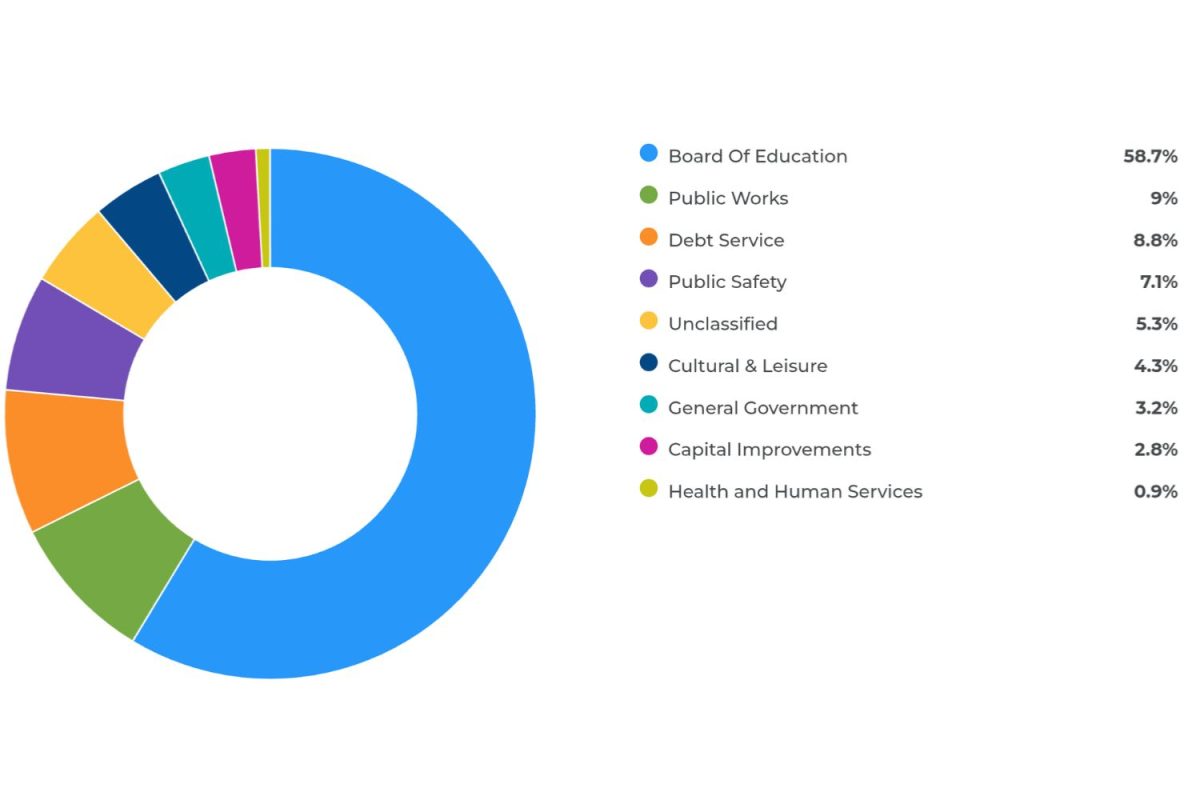
The $168,541,726 that is collected from these sources goes to 9 different categories. The Board Of Education, Public Works, Debt Service, Public Safety, Health and Human Services, Unclassified, Cultural & Leisure, General Government and Capital Improvements.
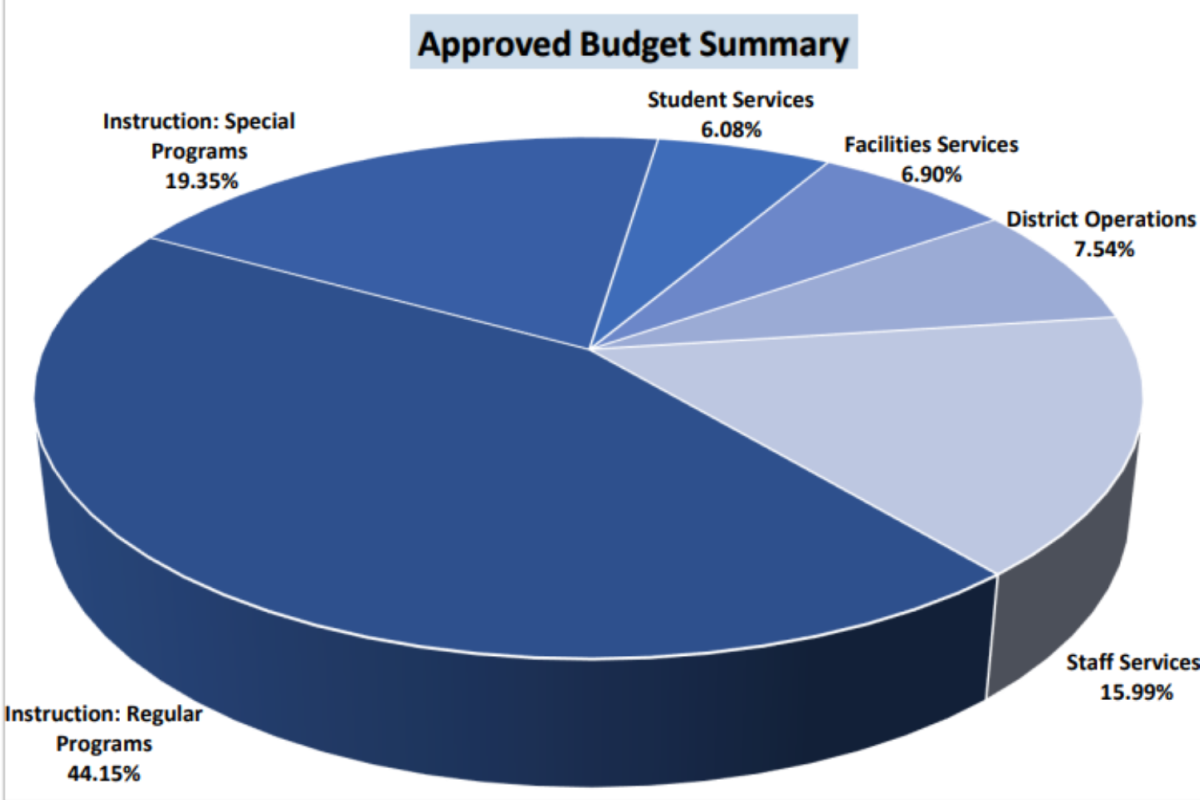
The largest of these is the Board of Education; it makes up 58.7% or $98,880,328. This money is further split into several smaller chunks to cover day-to-day and other regular expenditures, those being regular programs: Special Programs, Student Services, Facilities Services, District Operations and Staff Services. These several categories cover everything from the P.O.P. program, staff insurance, and daily operations.
Regular programs are the biggest of these as it’s the normal day-to-day operations. Staff services is the second largest to cover services offered such as insurance and benefits. Special programs are the third largest and cover programs such as P.O.P and afterschool events.
The second biggest category is Public Works comprising 8.9% or $14,939,716. Although it seems like it only covers things like fixing waterpipes and redoing roads, it does more than that as a lot of the money goes towards sewage treatment and disposal. The rest covers street services, maintenance of the town fleet, engineering, town building maintenance and Refuse & Recycling, which is a program to dispose of large and unique items.
The third biggest spending category is Debt Services at 8.8%, or $14,916,875. Although it is such a big chunk of the money that the town spends, and most residents understand the origins of the town’s spending, such as the recent school reconstruction projects, far fewer realize exactly who the town is indebted to or how those payments are distributed.
“The Town issues bonds to finance school construction, building projects, road reconstructions and open-space purchases,” Director of Finance for South Windsor, Patricia Perry said. “Bonds are sold competitively through secure bids and awarded to the bidder that provides the lowest true interest cost. For our Issue of 2026, Raymond James & Associates won the bid.”
The fourth biggest spending category is Public Safety at 7% or $11,786,954. Public safety which mostly encompasses the Police department but also the Fire Departments, street lights and Emergency Management are included. Nearly three quarters of the money goes towards the police department, then nearly a quarter goes towards the fire department, the remainder goes towards streetlights and emergency management.
The fifth biggest category is unclassified at 5.5% or $9,350,767. Unclassified can be thought of as a miscellaneous category as it covers a lot of programs and services, some of the biggest are social security, pensions, health and life insurance. With several smaller ones like The Watershed Collective, cemeteries and unemployment and many more making up the remainder.
There are 4 smaller categories which make up just 11% or $18,543,728 of the town’s budget: general government, cultural and leisure, capital improvements and health and human services. The general government covers the local government’s expenditures such as technology that they use, the paychecks of governmental officials, the running of other governmental organizations like elections. Cultural and leisure covers the parks and recreation department and the library. Health and human services covers South Windsor health and Human services department.
After all of these expenses one question that is left is “what happens to any money that is left unspent?”
“We put a budget together to achieve specific things in a fiscal year, which means we do not ask for any additional money than we actually need,” Town Manager Michael Maniscalco said. “Those surplus funds first get applied to a fund called tax stabilization account; it must be built up to 6 million dollars.”
After the tax stabilization fund is built up to 6 million dollars, any surplus money gets applied to the pension fund for the town, then to the town’s health insurance fund and then all other surplus gets moved into a general fund which is like a savings account for the town. From there that money either continues to get saved up or gets spent over the next few years to cover town expenses.