


































As a result of the war involving Iran, which began in late February oil prices as a whole are rapidly increasing. Crude oil prices have been highly volatile with some reports showing prices have exceeded $110 a barrel and others showing spikes closer to $120. While the issue itself is centered in the Middle East, South Windsor residents are feeling the effects through rising fuel prices.
But why are oil prices rising if America is currently the largest producer of crude oil?
Oil is a globally interconnected industry, thus one event results in a rippling effect across the world. So, even though American oil is untouched by the conflict, the effects are still seen by American residents.
“The price of gas rising will affect me and I’ll need to make sure I’m driving to places that make sense,” South Windsor High School senior, Daniel Guimond said. Guimond drives to school regularly.
Guimond is far from alone in this struggle. His frustration reflects a common sentiment among many people in South Windsor and the wider country as they attempt to preserve fuel with the average price for a gallon. In Connecticut, average prices have surged from around $2.70 to $3.50, with prices of nearly four dollars a gallon being seen not too far away. This is an extreme increase of around 30%, unseen since the 1980s.
While global factors continue to drive these costs upward, local officials are searching for ways to protect consumers in CT. Governor Ned Lamont has proposed suspending the 25-cent gas tax. A tax that is put on fuel distributors, although it’s often passed down to consumers. While it is still just a proposal, it has happened in 2022 after the special military operation in Ukraine, the state Legislature still has to vote on it.
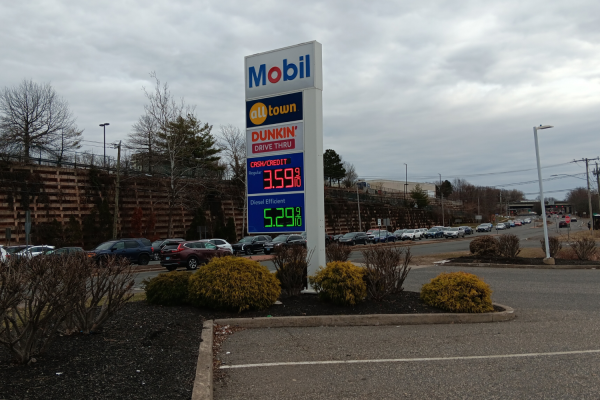
While lawmakers debate long-term policy, many residents are finding immediate relief at retailers who sell guaranteed lower market prices, mostly membership wholesale stores like Costco and BJ’s.
“Costco is going to continue to provide you with quality goods and services at the lowest price possible,” Costco Fuel Buyer Maria stated.
One of the reasons why stores like BJ’s and Costco can always provide lower gas prices below other competitors is due to bulk-buying power.
While most drivers focus on the price of gasoline, during price increases, few also think about the rapidly rising cost of diesel. In Connecticut, it has risen faster than gas, and it proves to be an additional cost passed down to consumers, recently hitting a staggering $5.63 per gallon. With practically every ship, truck, plane and train using diesel, every traditional consumer good is on track to rise in price. Goods that are most likely to rise in price are ones that aren’t already stockpiled nearby, mostly fresh produce and items that aren’t in high demand. In addition, many products use oil in some form as a foundational ingredient like plastic, polyester, and Vaseline (Petroleum Jelly) which are derived heavily from oil and natural gas will rise in price too. Although as of right now, in the middle of March, there is not a lot of published data on how much prices have increased, these essential goods are expected to rise in price sharply.