

















Eli Terry
Eli Terry was born in 1772 in East Windsor, although he would have lived in modern day South Windsor at 1544 Main Street or somewhere in the surrounding area. Sadly, we can’t know this for certain, as his house has been demolished for decades.
From a young age, Eli was working with mechanical parts, and he was an apprentice under Daniel Burnap, a clock maker who lived in South Windsor. This apprenticeship was pivotal in Eli Terry’s life. He grew up to work as a clock maker, with his biggest breakthrough coming in 1807. He was contracted to make 4,000 clock movements (the inside mechanics of the clock) in just 3 years, a task that seemed impossible.
To complete this task, he overhauled his production methods in the first year, and made 1,000 movements in the second year. From those two years, he learned that he had to focus on mass production and not hand crafting, and he was able to finish the last 3,000 in the final year. He also pioneered the creation of smaller clock movements, meaning that clocks now could sit on a shelf or a deck. Because of his pioneering work, clocks went from a luxury for the rich to a common item by the 1830’s.
Philip R Smith
Philip R. Smith Elementary School was originally named Avery Street Elementary before being renamed, though many people today are unaware of the change or who Smith was. Philip R. Smith served as principal of Avery Street Elementary for 19 years and spent more than 30 years working in education overall. He was well liked throughout the community.
Timothy Edwards
Timothy Edwards was born in 1669 and moved to South Windsor, then known as Windsor Farms, in 1694. He was a scholar and theologian who devoted his life to the clergy and to teaching. Edwards was known as a strict teacher, but many of his students learned so well under his instruction that they did not need to undergo examinations to attend Yale College.
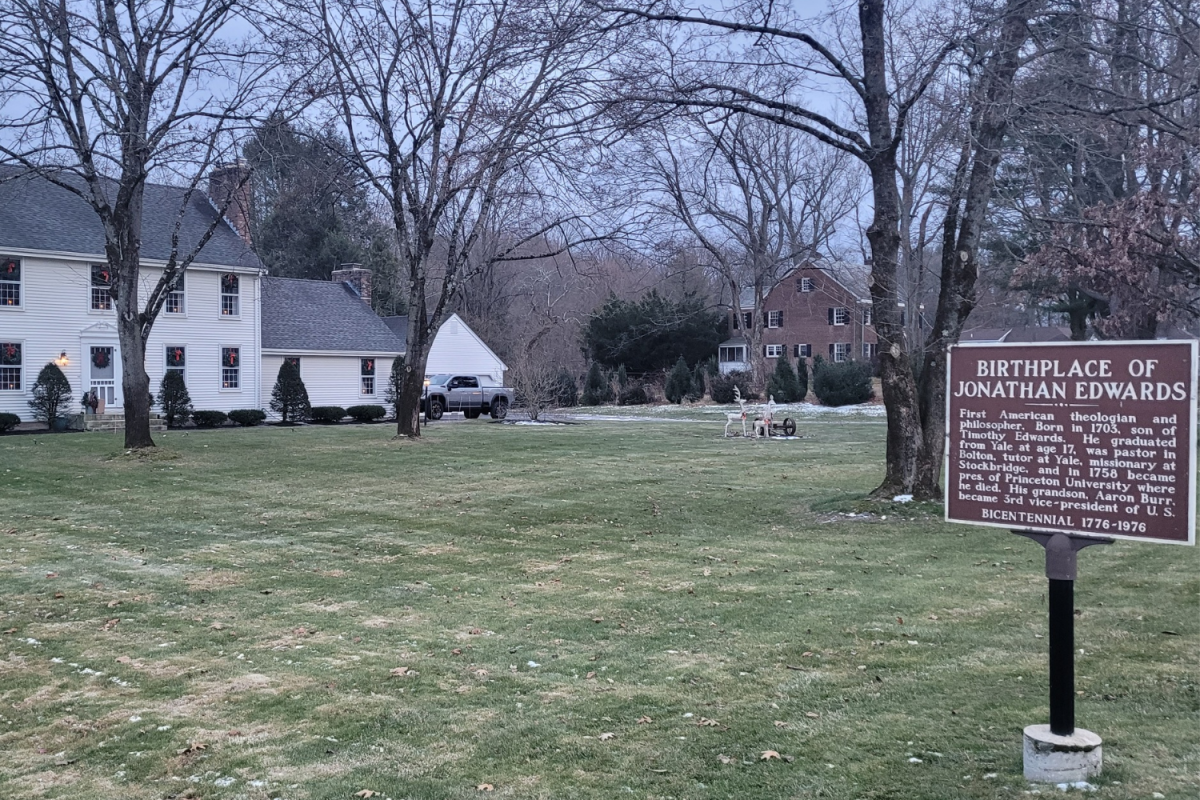
Edward’s teachings to the community and his children would greatly affect the community and colonies even after his death. His son, Jonathan Edwards, would not throw away the opportunities his dad gave him. He helped spur the first great awakening in colonial America (a time of great Protestant revival). He was one of the most influential people in the movement, with his sermons like “Sinners in the Hands of an Angry God” spreading like wildfire across the 13 colonies. Although, like his father, he had enslaved people and justified it by saying it was “an extension of long-accepted practices of servitude and dependency.” He would eventually serve as pastor and missionary to Mahican and Mohawk Indians. Then in 1758, he became the president of Princeton University for only 35 days before succumbing to a smallpox epidemic at age 54. He was survived by his grandson, Aaron Burr. Burr would become the 3rd vice president, and would be remembered for his role in the duel that killed Alexander Hamilton, his rival and the former secretary of Treasury under president George Washington.
Through their contributions to their fields, their community, and the nation, these individuals helped shape not only the town of South Windsor as it exists today, but also the broader history of the United States.