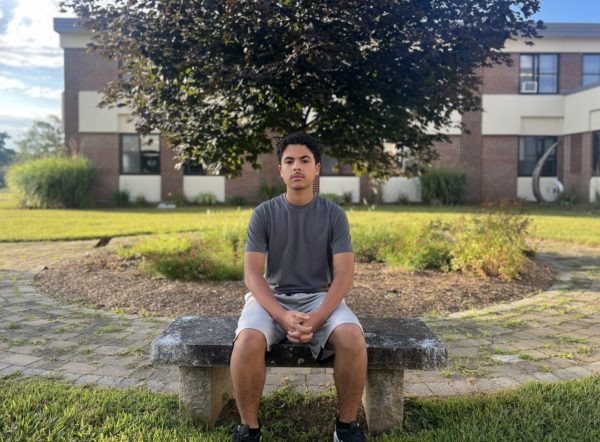






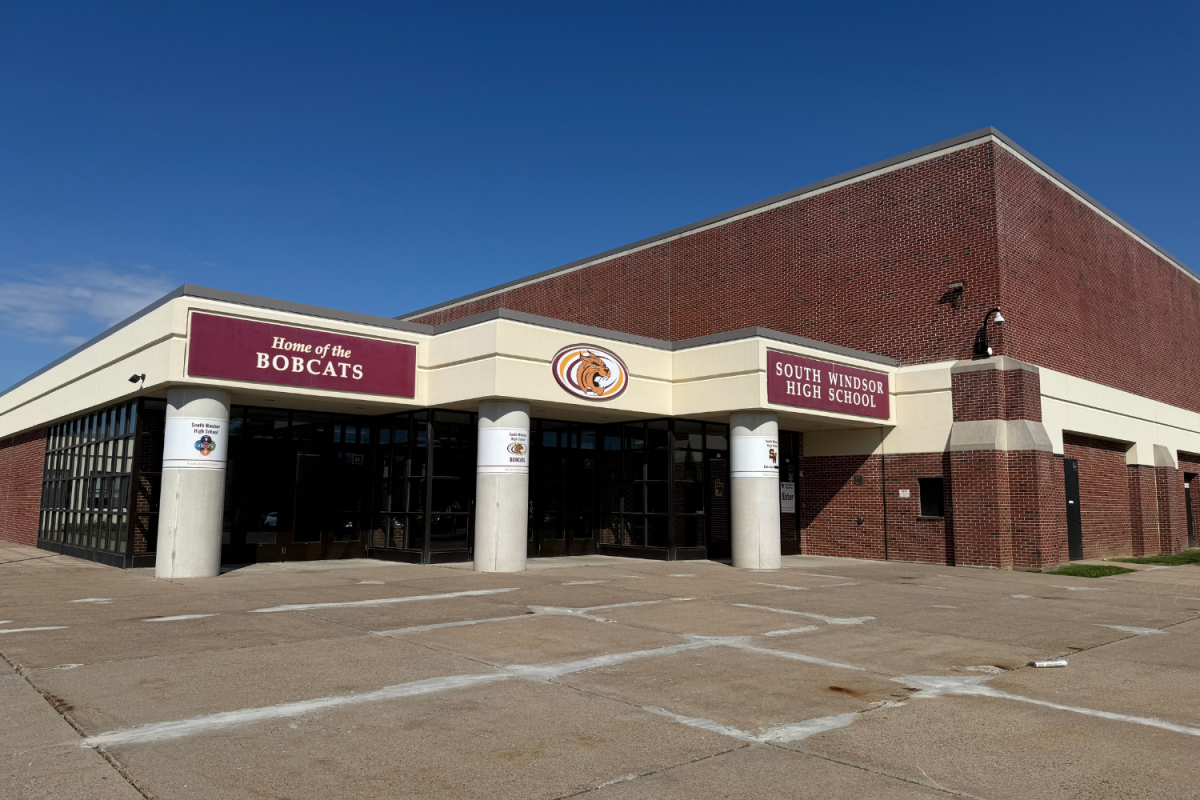








In the constantly evolving realm of artificial intelligence today, many students simply take the technology for granted. Whether it be using it to fix grammatical errors in an essay, or helping out on a math problem in a homework assignment, the vast majority of individuals choose to view artificial intelligence as a tool, and nothing more. Others, however, take the advent of artificial intelligence and make it their own. One of these individuals is South Windsor High School junior Karthik Srikumar, who took the technology and utilized it for the greater good.
In Peru, just east of the capital city Lima, lies the rural town of Huaycán, where the local students’ learning experience is being transformed. A new lightweight, energy-efficient AI model created in Connecticut is now in place in the town’s classrooms, and over the past several months, more than 1,200 students with previously limited access to computing have indulged into this technology, as well as many other young individuals who have started using Srikumar’s model for reading, writing, and creative exploration.
These AI models would not be in place and helping Peruvian students today if it were not for Srikumar’s efforts. However, the question arises—how did he do it?
Srikumar spent months creating and refining dense mathematical proofs to create OATNet, short for Optimized Arithmetic via Ternary Neural Networks. His objective was to create an energy-efficient model similar to the currently existing AI models of ChatGPT and Gemini. With this goal in mind, Srikumar set out and competed at the Connecticut Science and Engineering Fair, where he won $31,000 in prizes and scholarships from Waterloo Maple and Quinnipiac University.
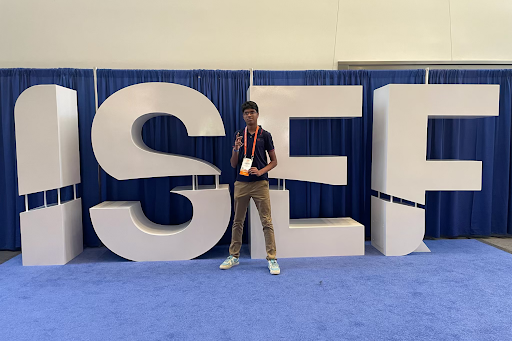
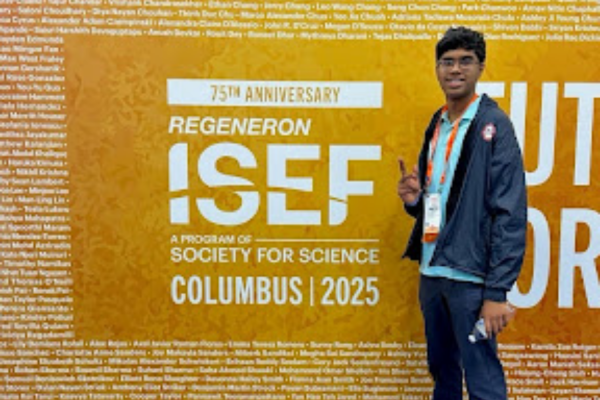
The fruits of his efforts did not cease there, however, as he was one of seven individuals to be invited to spend a week in Columbus, Ohio, at the Regeneron International Science and Engineering Fair. It was here when Srikumar realized the potential of his model, OATNet.
“As I prepared for [the International Science and Engineering Fair], the whole thing started to feel strangely small compared to the possibilities sitting in front of me,” Srikumar said. Awards were a good outcome, he noted, but they were not the main motivation. “Awards were nice, sure, but the idea that I could actually change something in the real world, that was different.”
Srikumar delved into these ‘possibilities,’ and came to the realization that his OATNet could make advanced artificial intelligence affordable for anyone to use. With this realization, his priority was no longer medals, but rather, it became people. He began thinking on how a powerful language model could be provided to students in areas where a single computer is an amenity.
His thoughts were realized following months of technical discussions, adaptation, and testing by a team in Peru, where they found that Srikumar’s OATNet was a viable tool to bring AI models to these areas with limited computing infrastructure, and after some months of reaching out, implementation was in sight.
In late February, officials from the office of the Minister of Transportation in Peru opened communication to explore whether the system could assist in addressing local challenges regarding educational access and digital equity. The system was deemed able to do so, moving it onto the pilot stage.
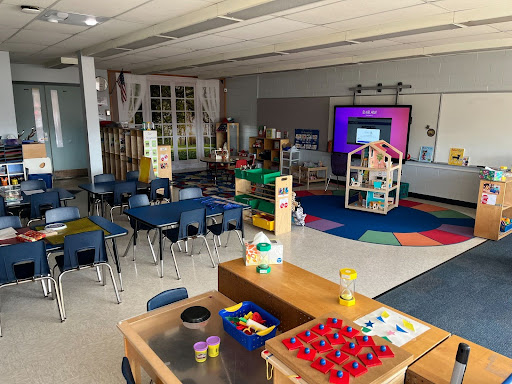
Huaycán, a town on the outskirts of Peru, saw the opening of more computer facilities in new schools for students from the first grade through the fourth grade for the first time. This provided a perfect venue to pilot and implement the OATNet program, which is exactly what happened in early August.
Schools and community learning centers in Huaycán now utilize language models powered by OATNet that are designed for low-energy environments. Students use the tools to practice language skills, and teachers rejoice in the benefits of this newfound technology as they transition into having more resources for the classroom.
When Peruvian officials legally commended the project, they highlighted it as an example of how appropriate-scale technology can expand opportunities in regions and communities, placing emphasis on Peru’s United Nations aligned goals of democratizing access to technology.
Connecticut governor Ned Lamont also took notice of Srikumar’s efforts, recognizing him for his contributions in artificial intelligence and environmental development.
At South Windsor High School, his initiative was recognized by his peers and teachers as well.
“I’ve been really impressed by what Karthik has done and how much he’s grown OATNet,” junior Harshiv Sohagiya said. Sohagiya continued, “Hearing him talk about the work behind it makes his commitment clear, and that shows in the achievements he’s reached.”
Junior Troy Marques also offered praise for Srikumar’s work. “I’m very impressed with OATNet,” Marques commented. “Karthik has always been a great kid and his product will help a lot of people.”
History teacher Mark D’Amato emphasized Srikumar’s character. “He’s a very driven individual,” D’Amato said. “He’s somebody who is trying to empower and provide guidance to not only himself but others around him as well.”
Despite the great accomplishments Srikumar has done thus far, his hunger to bring positive change remains insatiable.
“If I’m being honest, I am not done and I never will be. I was able to begin to make a change because I was given these opportunities, and I’m hoping that by doing the same for some young minds, the next generation of innovation comes. I have some work in the city of Hartford coming up, and I know that too could really change some lives,” Srikumar told The Prowl.
Srikumar’s OATNet remains in the pilot stage in Huaycán through December, and will hopefully be implemented in countless communities afterward, continuing to make a positive impact and help students.
There is yet more to come for Srikumar as he looks onto Hartford, Connecticut, where he can surely make an impact there as well. His efforts are nothing short of commendable, and should serve as an inspiration for our generation, and the generations to come, to help make the world a better place for all of us.