













As South Windsor moves farther into fall, more wild turkey sightings are present in the locals backyards, whether it is just one turkey or a whole flock of turkeys, residents are seeing a large impacts these birds leave. Whether someone is peeping through their window or driving down a residential street, turkeys appear when the trees start to change colors, and many wonder why.
Turkeys typically travel in flocks, and they like to forage in fields during the daytime, and during night they like to hide by trees to avoid predators. They like to live in areas with diverse ecosystems for roosting and ground covering so they are able to nest. Turkeys need a mixture of open and wooded areas to forage and cover.
The type of turkeys that typically live in South Windsor are the Eastern wild turkey. Males are called Toms and they have a bright beard that travels from around the breast to their legs. They have a dark iridescent body and a head that turns bright white, red, or blue during mating season. Toms also have spurs on their legs which are sharp and used as a weapon. Females, which are lighter in color, are referred to as Hens. They do not have spurs on their legs and they typically have a pale blue head. It is uncommon for a Hen to have a beard, however it is not impossible.
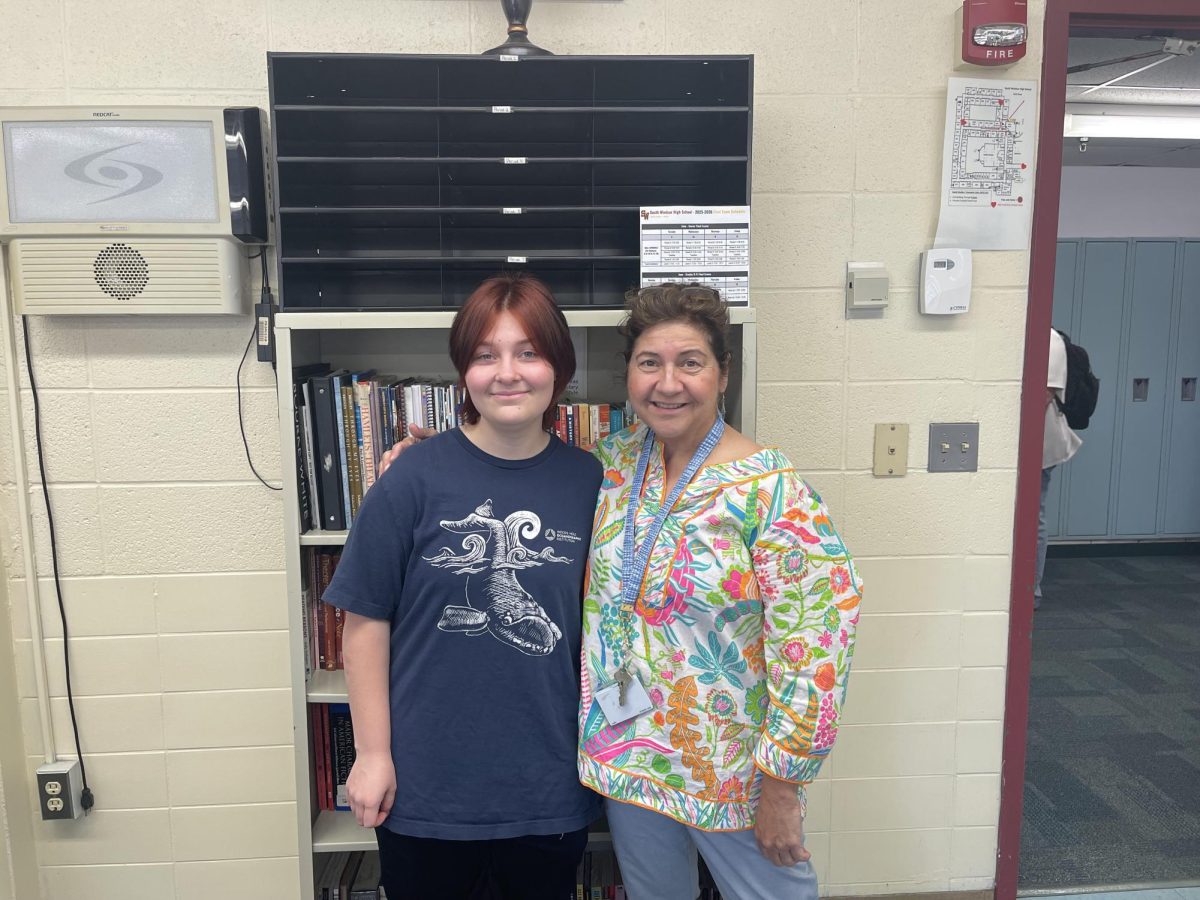
Turkeys are known as a fall staple, typically around Thanksgiving time. So, why do we see so many turkeys in the fall? SWHS teacher Mrs. Field who specializes in environmental science helps to answer this question.
“Turkeys are more visible in the fall when most of the leaves are off,” Field said. “Their plumage helps them blend into the forest in the spring and summer, when they are incubating eggs and protecting chicks. In the fall, they are trying to fatten themselves up as much as possible, especially the youngsters, since food is less available in the winter.”
Turkeys seem to be thriving in the fall, and there are so many of them. This is due to multiple restoration programs set in Connecticut around the 1970s to help stabilize the turkey population. Programs like the Master Wildlife Conservationist Program have helped to promote the wildlife of these turkeys and educate locals on the importance of saving these turkeys. Connecticut also has programs like Trap and Transfer which help to distribute turkeys across the state to establish a healthy population. Even the National Wild Turkey Federation works to improve habitat in the Northeast by establishing nesting, managing fall forage, and even supplying resources in the winter.
As the time gets closer to Thanksgiving conversations surrounding the cultural impact of turkeys during the holiday begin to flourish as well. Many families embark on enjoying a nice roasted turkey on Thanksgiving to share with loved ones. The turkeys’ large size and native North American roots makes it so significant during this holiday. Historically, turkeys were primarily raised for meat, and when the holidays arrived, many families would prepare one as the centerpiece of their meal. This led the turkey to become such a culturally significant staple for Thanksgiving.
Many wonder about the impacts of hunting turkeys for Thanksgiving and how this could impact restoration programs. Hunting can be okay for a wild turkey population, if it is done in moderation, but over hunting is what led to the need for restoration programs.
“Turkeys were hunted nearly to extinction in CT – that is harmful for the environment because any disruption in the food web can have negative cascading effects,” Field commented. “Turkey conservation efforts have substantially increased their population. Hunting helps control the population – in rural/agricultural parts of the country, turkeys can become an agricultural nuisance, especially in spring during planting season (they’ll eat the seeds). So careful population management is necessary.”
Many locals enjoy seeing turkeys around the holiday season because it is a fall staple, many stopping to take pictures and enjoy the moment.
“Yes, I have seen wild turkeys,” Local South Windsor resident Jonathan Swett said. “They seem to appear mostly in fall that I have noticed. They are cool looking creatures, they make me appreciate the green spaces that CT preserves which allows them access to our neighborhood.”
It is so important to keep restoration programs running so that not only residents can enjoy the turkey sightings, but also to help the local agriculture. Turkeys have a significant impact on South Windsor’s agricultural aspects and the ecosystems.
“Turkeys are important for seed distribution of native shrubs and trees,” Field said. “They help decomposition on the forest floor by aerating the leaf litter while they scratch around, looking for food. They can have a similar impact in agricultural fields in the fall and early winter – kind of a low impact tilling of the soil. Turkeys are also prey for coyotes and bobcats (and occasionally a lucky red fox).”
For now, turkeys continue to have a large impact on the South Windsor community and the environment around them. Seeing them in town is a reminder of the town’s natural heritage and a reminder of what it means to come home for the holidays.