




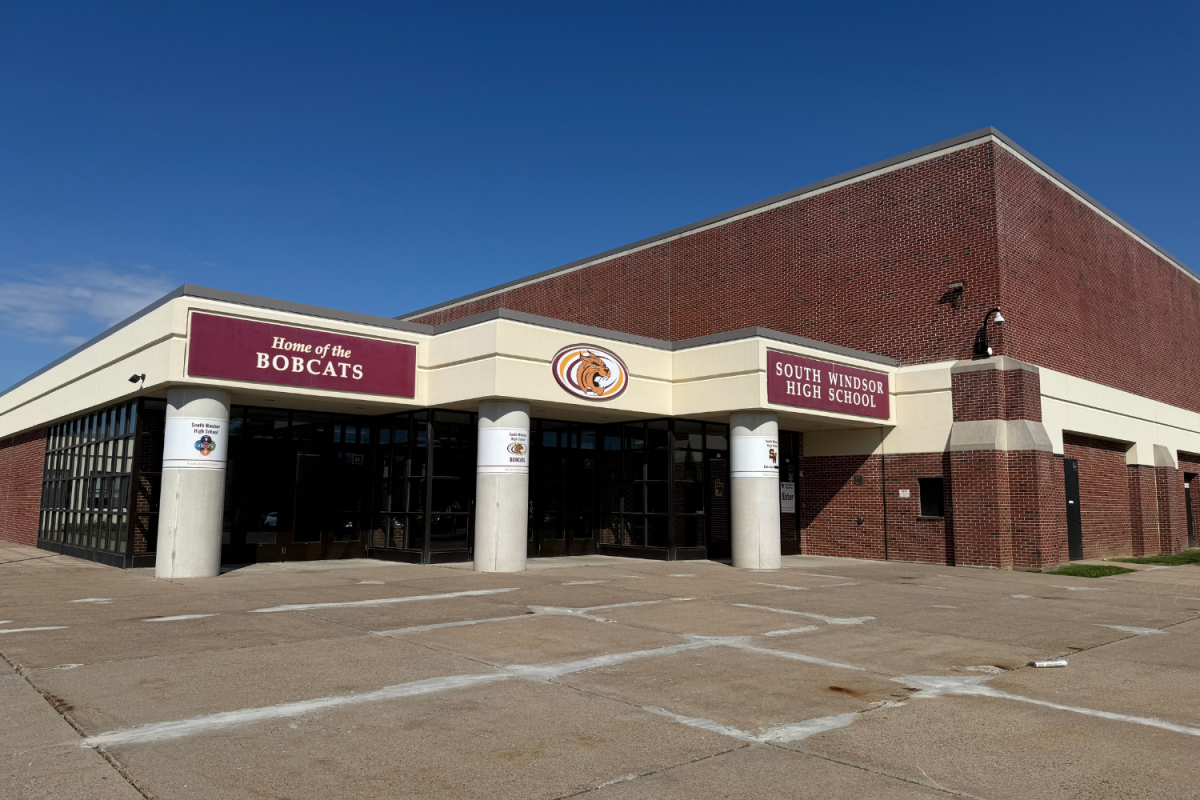









Banned Books Week is held every year during the end of September and early October to call attention to the ongoing national issue of censorship in schools and libraries all across the country. Locally, while South Windsor High School Library has never had a book banned, it has faced challenges.
A challenged book is when a person formally objects to material and asks for its removal; a banned book is material that has actually been removed from the library.
When deciding on whether or not a book should be permitted in the school system the content is evaluated to determine whether it is developmentally appropriate for the collection, and the challenged content must be a large chunk of the book.
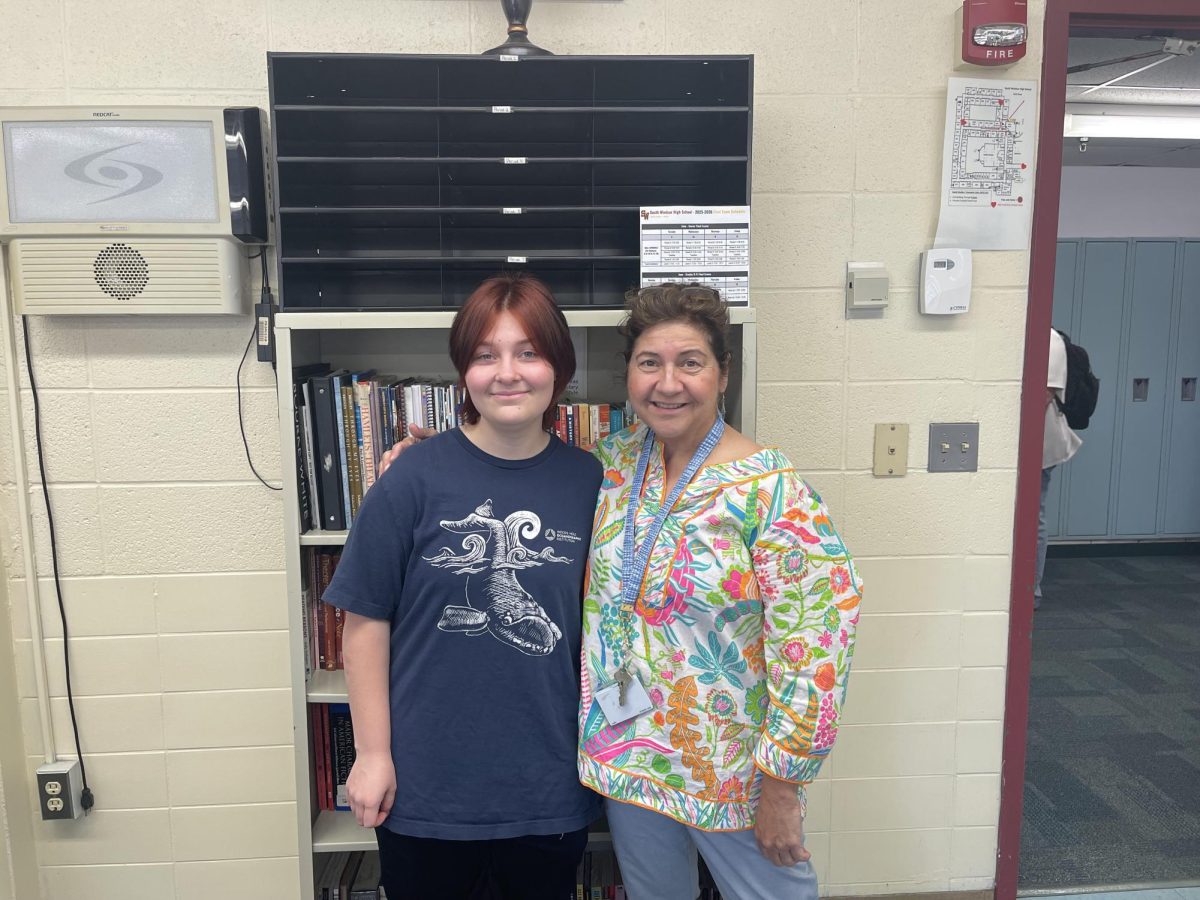
South Windsor High School Media Specialist, Christine Fielding provided insight into the process of challenging a text in the high school. In the event a text is challenged, the material is sent to Assistant Superintendent, Tracy Peterson, who is head of the curriculum department.
Fielding noted, however, that the district’s policy is undergoing a major revision.
“The district will be putting together a policy where there’s a lot of different stakeholders,” Fielding said. “So there might be a parent on a board, teachers, student, a librarian, myself would be on the board and we would really look at the material and assess it.”
Fielding provided an example of how the process worked. One example of a book that was challenged was the picture biography, The Fearless Flights of Hazel Ying Lee by Julie Leung. This book was never banned, but it was challenged by a parent. The parent didn’t want their child to know about the history of the event in that book. The Fearless Flights of Hazel Ying Lee is a story about the first Asian American woman becoming a fighter pilot and helping out her country.
“It made me think about the fact that you have to look at a book in the entirety of it… you can’t just look at that one little piece,” Fielding said.
With over 20 years of experience, Fielding discussed the patterns she has observed as a media specialist of books that have been challenged.
“Right at the beginning of my librarian work in 2000, a lot of books that were challenged were based more on religious content,” Fielding told The Prowl.
Fielding explained cultural and political information were commonly challenged over the years. However, recently, an uptick in texts containing information regarding racial injustices, the discussion of equality in literature, sexual education and gender identity have been challenged.
Fielding believes it is the librarians who ensure all demographics and perspectives are available in the library. She feels all students should have a text they identify with.
However, parents have the ability to determine which books their children are permitted to read. This issue of control is one brought to the forefront of the librarian’s mind, as parents have the ability to challenge texts due to their personal preferences.
Fielding emphasized the idea of individual choice; students do not have to read all the books available to them; if they are uncomfortable with certain texts, they should avoid them instead of petitioning for their removal.
Although students may choose what texts to ingest, Fielding feels that challenging texts may be an opportunity for students to adopt different perspectives benefiting them in the long run. They see this as a learning opportunity for students, and want them to have access to any material that may develop their understanding of the world around them.
Nationally, there are a lot of banned books in southern states, such as Florida. Political and cultural reasons could have caused those books to be banned. Racial justice and sexual education are the reasons that most commonly challenged books.
“Banned books week reminds us that the right to read is the right to think freely and no freedom is more fundamental to democracy,” Fielding said.